NCLEX Test Day Checklist: Pearson VUE and the 5-Hour Clock
Prepare for NCLEX-RN test day with this checklist: matching ID, prohibited items, security checks, breaks, the 5-hour clock, and what to do after the exam.
NCLEX Test Day Checklist: Pearson VUE and the 5-Hour Clock
NCLEX-RN test day is a 5-hour appointment at a Pearson VUE test center. Bring an unexpired government ID that exactly matches your registration name, leave all prohibited items behind, arrive early, and use the optional breaks inside the 5-hour clock. The first break prompt comes after 2 hours; the second comes after 3.5 hours. Expect palm scans, a photograph, and continuous monitoring. The only scratch material is the erasable noteboard issued by the test administrator. After the exam, official results come from your NRB within six weeks; Quick Results may be available for $7.95 two business days later in participating U.S. jurisdictions.
Test day is the culmination of months of nursing school and weeks of preparation. Most students who fail on test day do not fail because of content; they fail because of fatigue, anxiety, or a logistical mistake. A checklist removes the uncertainty and lets you focus on the exam.
What to Bring
The most important item is your ID. Pearson VUE requires one government-issued, unexpired, physical ID with a recent photograph and your signature. The name must exactly match the name on your registration. International centers, including Puerto Rico, require a passport book or card only. If your primary ID does not have a signature, bring a secondary ID with a signature.
Bring:
- Unexpired government ID matching your registration name exactly.
- Secondary ID if your primary ID lacks a signature.
- Light snack for break.
- Water bottle for break.
- Confirmation email.
Do not bring:
- Phone, tablet, smart watch, smart glasses, or smart ring.
- Personal calculator, study aids, or notes.
- Most outerwear or personal earplugs.
- Dictionaries or conversion tables.
- Anything that records, transmits, or stores data.
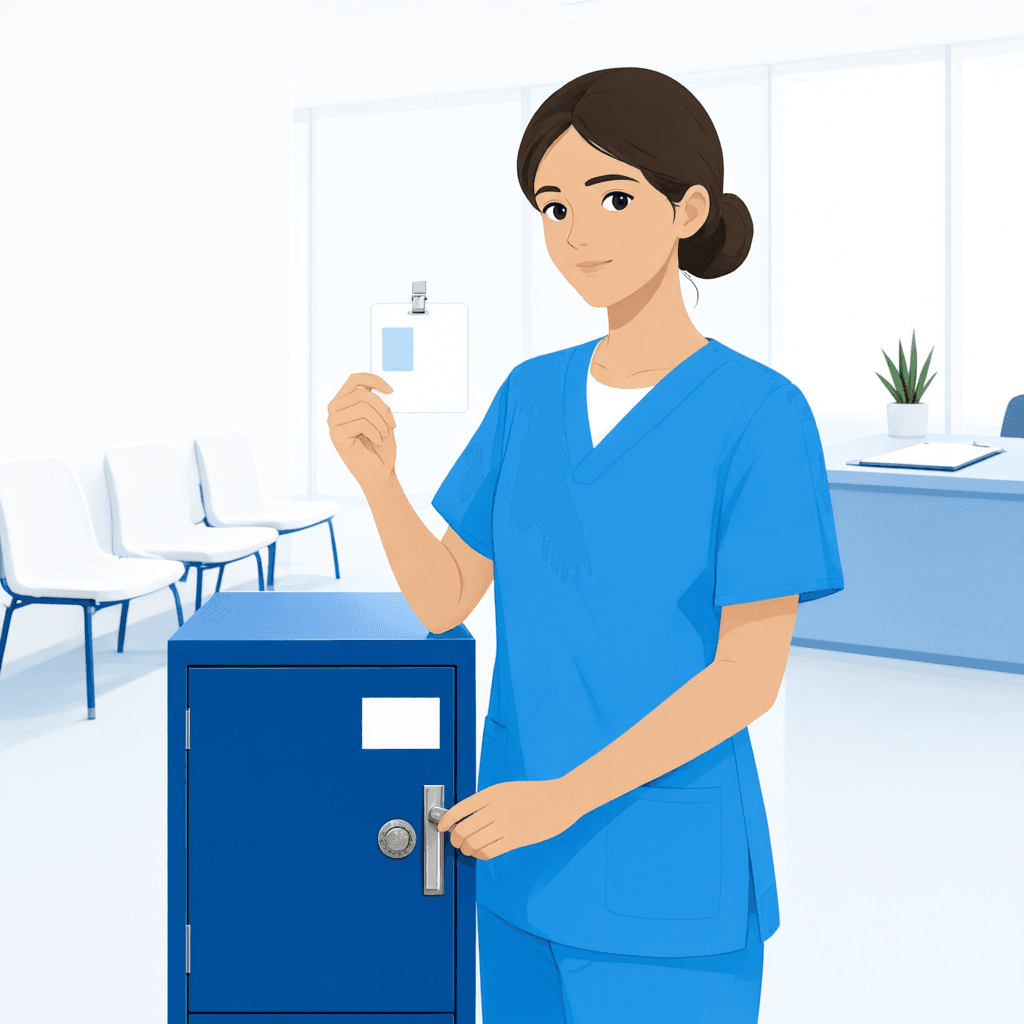
You cannot bring anything into the testing room except your ID. Lockers are provided for personal items, but you will not have access to them during the exam. Leave jewelry, watches, and large accessories at home to avoid delays at security.
ID Traps That Turn Students Away
The most common reason for being turned away at the test center is an ID problem. Check every detail at least a week before the exam:
- Does the first and last name on your ID match your Pearson VUE registration exactly?
- Is the ID unexpired?
- Is it a physical ID? Digital IDs on phones are not accepted.
- If you are testing internationally or in Puerto Rico, do you have a passport?
- If your primary ID lacks a signature, do you have a secondary ID with a signature?
If you discover a mismatch, contact Pearson VUE immediately. Name changes must be processed at least 10 business days before test day. Do not wait until the night before.
Security and Prohibited Items
Pearson VUE security is strict. You will provide a digital signature, have your palm-vein pattern scanned, and have a photograph taken. You may be asked to turn out your pockets, roll up your sleeves, and show that you have nothing in your mouth. Continuous audio and video monitoring occurs throughout the exam. You will be palm-scanned again after any break.
Prohibited items include phones, tablets, smart watches, smart glasses, smart rings, personal calculators, study aids, conversion tables, dictionaries, most outerwear, and personal earplugs. The test center supplies earplugs on request if you prefer them. Do not bring your own. A personal calculator is unnecessary because the exam provides an on-screen calculator.
The Noteboard and Marker
The only scratch material allowed is the erasable noteboard and marker issued by the test administrator. You can request a replacement board if it fills up. Use it to write your brain dump at the start of the exam: lab values, isolation mnemonics, medication suffixes, and formulas. Keep it simple. The noteboard is also your memory for NGN case studies. Write the diagnosis, key findings, and priority actions as you move through each case.
Copying exam items or writing them down is a legal violation. Use the board for your own notes only. Return it at the end of the exam.
How to Tackle NGN Case Studies Under Time Pressure
NGN case studies are longer than standalone items, and the clock can feel tighter when you are managing several patient cues at once. The best approach is to treat each case study as a single clinical encounter, not as a series of isolated questions. Start by reading the patient summary once to build a mental picture. Note the diagnosis, age, allergies, and any red flags that could change the priority of care.
Before you move to the questions, write the key facts on the noteboard. Use a simple layout: diagnosis in one corner, vital signs and lab values in a list, and the medication list in another area. This gives you a quick reference so you do not have to scroll back through the case when the questions ask about changes in status. The noteboard is especially useful for trend items where the patient condition changes over time.
Read each question carefully but avoid second-guessing earlier answers. Most case studies are built around a single unfolding scenario, and later items may depend on decisions made earlier. If you change your mental model halfway through, you can create confusion. Instead, make your best choice, record the rationale, and move on. If a question asks you to prioritize, return to the noteboard and ask which problem is most life-threatening or most likely to cause permanent harm.
When you see a bow-tie or matrix item, work through the rows systematically. Do not rush to fill every box. Identify the correct action for each part of the clinical judgment model before selecting. For trend items, compare the current value with the previous value and ask what the change means for the patient. A rising creatinine in a patient receiving nephrotoxic medication is a different priority than a stable creatinine in a well-hydrated patient.
Finally, remember that case studies are partial-credit opportunities. You do not have to be perfect on every row to earn points. A thoughtful approach that protects the patient and follows the nursing process will usually earn more credit than a hurried attempt to click every correct-looking option. Use the breaks to reset your focus before the next case study block.
The 5-Hour Clock and Breaks
The 5-hour appointment includes the tutorial, the exam, optional breaks, and the post-exam survey. All breaks are optional and inside the clock. The computer prompts you for a scheduled break after 2 hours and again after 3.5 hours. You must leave the room for any break. If you leave the building, you will need to go through full re-entry security.
- Start. Complete the tutorial, brain-dump on the noteboard, begin the exam.
- 2 hours. Optional break. Stand, stretch, eat a snack, use the restroom.
- 3.5 hours. Optional break. Refuel and reset for the final stretch.
- End. Complete the post-exam survey.
Plan food and caffeine around the breaks. A small snack with protein and complex carbs works better than sugar. Avoid too much caffeine if it makes you jittery. The average candidate finishes in about 2 hours and 14 minutes, so only a tiny fraction need the full 5 hours, but plan for it anyway.
The Brain Dump at the Start
Use the first few minutes of the tutorial or the first items to write your brain dump on the noteboard. Include the facts you are most likely to second-guess under pressure. Common brain-dump items include:
- Normal vital sign ranges for adults, children, and infants.
- Common lab values: potassium, sodium, magnesium, calcium, glucose, BUN, creatinine, hemoglobin, platelets.
- Isolation mnemonics: airborne, droplet, contact.
- Medication suffixes and antidotes.
- Cardiac output, stroke volume, and blood pressure formulas.
- Conversion factors for metric and household units.
Keep the brain dump short. If you write too much, you will waste time and energy looking for the right line. The goal is to offload your anxiety, not to recreate a textbook.
What to Do After the Exam
After the exam, you will feel like you failed. Almost everyone does. The CAT algorithm serves hard items, and the exam is designed to feel difficult. Do not Google remembered questions. Student-reported Google verdicts are wrong constantly, and the 15 pretest items mean some of the questions you are worried about were not even scored.
Official results come from your NRB within six weeks. In participating U.S. jurisdictions, you can purchase Quick Results for $7.95 two business days after the exam through your Pearson candidate profile. Quick Results are unofficial and do not authorize practice. The Pearson VUE Trick is internet folklore, not an official result. Wait for your NRB.
Test Day Timing Checklist
Hour-by-hour planning reduces test-day friction. Here is a sample timeline for a morning appointment:
- Wake up. Normal routine; avoid new foods or extra caffeine.
- 2 hours before. Light breakfast, review brain-dump sheet, pack bag.
- 1 hour before. Leave for the test center, arrive 15 to 30 minutes early.
- Check-in. Palm scan, ID check, photo, locker your belongings.
- During the exam. Read carefully, use the noteboard, take breaks.
- After the exam. Do not obsess; rest and wait for official results.
The simpler your timeline, the less mental energy you waste on logistics.
What to Do If Something Goes Wrong on Test Day
Despite preparation, things can go wrong. You might hit traffic, forget your snack, or feel unwell during the exam. The key is to avoid catastrophizing. A single bad stretch of items does not determine your result. The CAT algorithm is designed to handle variability. Take a deep breath, use the optional break if offered, and return to the next item with fresh focus.
If you are genuinely ill or have a family emergency, you can choose to reschedule before the exam begins. Once you start the exam, you generally cannot reschedule. If you finish the exam despite feeling unwell, your final ability estimate is still compared to the passing standard. Many candidates have passed under less-than-ideal conditions.
Key Points to Remember
- Bring a government-issued, unexpired, physical ID matching your registration name.
- Leave phones, smart watches, study aids, and outerwear in the locker.
- The 5-hour clock includes the tutorial, exam, breaks, and post-exam survey.
- Use the noteboard for a brain dump at the start and case-study tracking.
- Optional breaks are offered after 2 hours and 3.5 hours.
- Official results come from your NRB within six weeks.
- Trust your preparation and avoid post-exam Google verdicts.
Logistics and mindset are just as important as content on test day. Confidence comes from preparation, and preparation comes from realistic practice. If you want a platform that makes test day feel like just another practice session, NCLEX Cracker offers full-length CAT simulations, a comprehensive question bank, and adaptive study tools built by nurses who have been there. You can check out our plans and pricing when you are ready.
Test Day Confidence Comes from Practice
The students who walk into the test center calm are not the ones who memorized the most facts; they are the ones who have practiced the entire day mentally and physically. They have taken full-length simulations, timed their breaks, eaten the same breakfast, and worn the same clothes. They have seen the 5-hour clock, the palm scan, and the noteboard before. The real exam feels like just another practice session.
We have found that students who complete at least 3 full-length simulations before test day report significantly less anxiety and better pacing. The simulation is not just a test of knowledge; it is a rehearsal of the entire day. Treat it that way, and test day becomes routine.
If you want a platform that supports this level of preparation, NCLEX Cracker provides 18+ full-length NCLEX-RN practice tests with accurate NGN scoring, 5,000+ practice questions, 15,000+ flashcards, 50+ study guides, and unlimited AI tools. You can explore our plans and pricing when you are ready.
Ready to crack the NCLEX-RN?
NCLEX Cracker gives you 18+ full-length NCLEX-RN CAT simulations, 5,000+ exam-style questions, 15,000+ flashcards, 50+ study guides, and a complete study engine: Adaptive Quiz Generator, Adaptive Flashcard Generator, AI Tutor, Homework Helper, YouTube Summarizer, and Study Schedule Creator. Everything is aligned to the official NCLEX-RN Test Plan and comes with unlimited tokens, unlimited credits, no throttling, unlimited access, and unlimited usage. No subscriptions, no usage caps.
No credit card required for the free trial. One-time payment for full access.
Related articles
NCLEX Retake Rules and State-by-State Requirements
NCLEX-RN retakes follow a federal NCSBN floor of 45 days between attempts and 8 attempts per year, but states can add stricter rules, remediation, and deadlines.
Test Day & RetakesFailed the NCLEX? How to Read Your CPR and Rebuild
A failed NCLEX-RN is not the end of your nursing career. Learn how to read your CPR, distinguish content gaps from strategy gaps, and build a retake plan that works.
Turn strategy into a passing NCLEX-RN score
18+ full-length NCLEX CAT simulations, 5,000+ questions, 15,000+ flashcards, and unlimited AI tools. Start today.
Unlock Everything